Unlocking AI Commerce: How the New Personal Agent Protocol Empowers Your AI to Navigate the Digital World
Unlocking AI Commerce: How the New Personal Agent Protocol Empowers Your AI to Navigate the Digital World
The era of personal AI agents is rapidly accelerating, promising to transform how we interact with the digital world. These intelligent companions are designed to automate tasks, manage information, and act on our behalf across myriad online services. However, a significant hurdle has persisted: how can personal AI agents securely authenticate with businesses and carry contextual understanding across different channels, truly enabling seamless, AI-driven commerce? The answer is beginning to emerge with the recently announced Personal Agent Protocol (PAP).
What is the Personal Agent Protocol (PAP)?
On October 6, 2026, industry leaders Sierra and Meta, in collaboration with partners including Genesys, Instinct, Rocket, Shopify, Stripe, and Walmart, announced the development of the Personal Agent Protocol (PAP). This initiative aims to establish an open standard defining how personal AI agents can securely authenticate with businesses and manage their interactions.
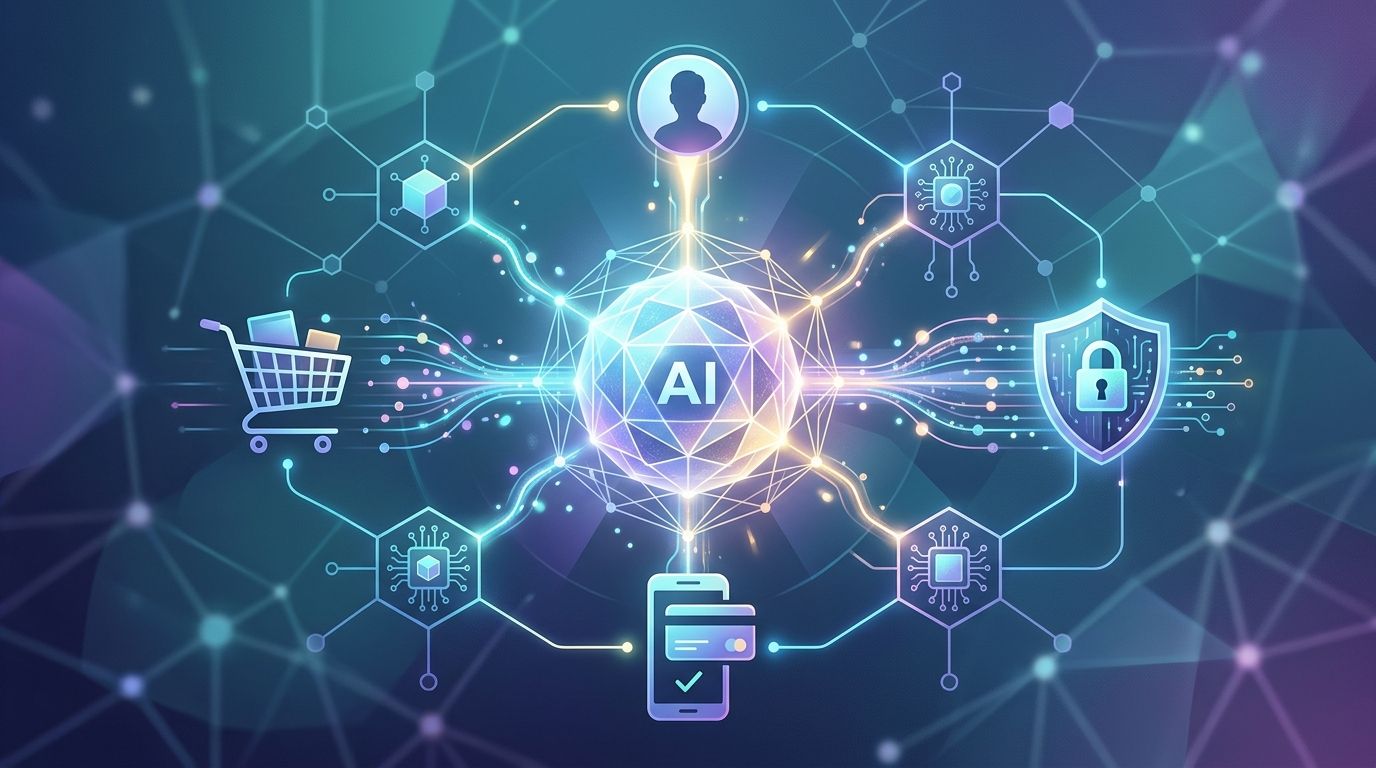
The core purpose of PAP is to create a standardized "handshake" between consumer-facing AI agents and enterprise systems. Currently, many personal AI agents operate by simulating human interaction on websites, a process that can be slow, inefficient, and prone to failure. PAP seeks to replace this fragmented approach with direct, secure, and context-aware communication, paving the way for a truly integrated AI commerce experience. A v0.1 specification of the protocol is anticipated for publication later this month, followed by design workshops and a reference implementation to aid developers.
Secure Authentication for Your Agent
One of PAP's foundational pillars is secure authentication. The protocol is designed to verify that an AI agent is indeed acting on behalf of a real person and to provide businesses with visibility into the agent's actions on their platforms. This is built upon the widely adopted OAuth authorization standard.
Crucially, PAP empowers users with control over their agents' access. Consumers will decide what level of permission their personal agents receive, ranging from read-only access for browsing information to write access for executing transactions or making changes. Businesses, in turn, can set parameters for what these agents are permitted to do through their websites, APIs, or even their own proprietary AI agents. This granular control is vital for trust and security in an agent-driven economy, ensuring your AI acts within your explicit boundaries.
Seamless Contextual Continuity
Beyond authentication, PAP addresses another critical challenge: maintaining context across diverse interactions. Imagine your AI agent researching products on a website, then seamlessly transitioning to a chat application to ask a support question, and finally initiating a purchase—all while retaining the full history and understanding of your intent. The Personal Agent Protocol is designed to enable this "session-based authorization," allowing an agent's session to carry across various digital channels.
This means a question asked by your agent before you've even signed in, and an order modified afterward, will be recognized as part of a single, continuous interaction. This continuity dramatically reduces friction, eliminates the need for repeated explanations, and ensures a more efficient and personalized experience for users and businesses alike.
The Promise of AI-Driven Commerce
The implications of an open standard like PAP for AI commerce are profound. By streamlining authentication and maintaining context, personal AI agents can truly become indispensable navigators of the digital marketplace. Your agent could:
- Automate purchases: Securely make purchases or bookings on your behalf, applying preferences and payment methods.
- Handle customer service: Interact with business support systems, retrieving information or resolving issues with full contextual awareness.
- Personalize experiences: Leverage shared context to negotiate better deals, suggest highly relevant products, or manage subscriptions more effectively.
- Reduce friction: Eliminate repetitive form filling and authentication steps, making online interactions significantly faster and smoother.
As Bret Taylor and Clay Bavor, co-founders of Sierra, note, "The principle behind the Personal Agent Protocol we're building is that consumers decide what access to give their personal agents, and companies set parameters for what those agents can do." This empowers both sides to engage in a trusted, efficient digital economy.
MyHermy: Your Agent's Foundation for the New Digital Economy
For myHermy users, the advent of protocols like PAP represents a significant leap forward. MyHermy provides a dedicated VPS, giving you full root/SSH access and complete data ownership. This unparalleled control means your personal AI agent isn't confined to a proprietary ecosystem; it runs on infrastructure you own and manage.
This level of control is perfectly aligned with the spirit of PAP, which emphasizes user agency and open standards. Whether connecting to existing ChatGPT Plus, Claude, GitHub Copilot, or Grok subscriptions, myHermy users are already positioned to run powerful AI agents. With daily backups and multi-channel reach (Telegram, WhatsApp, Discord, Slack, email), your myHermy agent is robust and accessible. As PAP takes hold, your myHermy-hosted agent will be able to:
- Leverage PAP directly: Integrate future PAP specifications and reference implementations directly into your agent's code, thanks to full root access.
- Maintain data ownership: While PAP handles secure interaction, your agent's core data and context remain entirely under your control on your myHermy VPS.
- Operate across channels seamlessly: The multi-channel capabilities of myHermy will be greatly enhanced by PAP's ability to carry session context across various platforms, truly unifying your agent's digital presence.
MyHermy ensures that as new open standards like PAP emerge, you have the underlying infrastructure and freedom to adopt them, giving your personal AI agent the strongest possible foundation for secure, intelligent, and seamless interaction across the digital world.
Practical Takeaways for MyHermy Users
- Stay informed: Keep an eye on the official releases and updates for the Personal Agent Protocol (v0.1 specification due this month!). This will be crucial for understanding how to integrate future capabilities into your personal AI agent.
- Embrace control: Recognize that your myHermy VPS provides the perfect environment to manage your agent's identity and permissions in line with PAP's principles, ensuring you retain ultimate control over its digital interactions.
- Anticipate enhanced capabilities: Look forward to a future where your personal AI agent can perform complex, multi-step tasks across different businesses with unprecedented efficiency and security, making AI commerce a practical reality.
The Personal Agent Protocol is a critical step towards an interoperable future for personal AI agents. By standardizing how agents authenticate and carry context, it promises to unlock a new era of secure, seamless, and intelligent digital interactions for everyone.