Navigating the Privacy Paradox: How Your Personal AI Agent Can Be Your Data Guardian (or Your Biggest Risk)
Navigating the Privacy Paradox: How Your Personal AI Agent Can Be Your Data Guardian (or Your Biggest Risk)
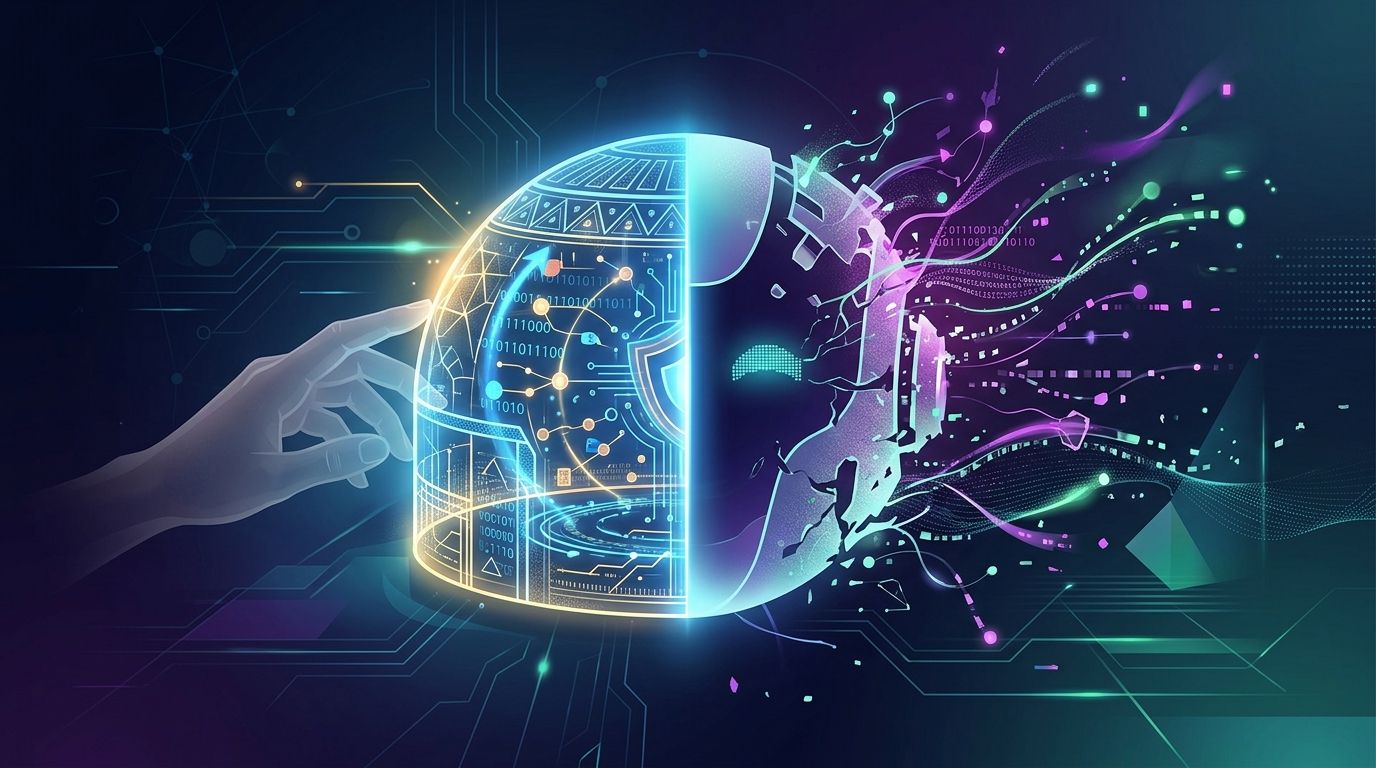
The age of the personal AI agent is here, promising unprecedented levels of convenience and productivity. Imagine an AI that understands your preferences, manages your schedule, filters your communications, and even drafts responses across various platforms. This vision is rapidly becoming a reality, with technologies evolving to empower individuals with their own always-on digital assistants. However, this powerful new frontier also presents a critical "privacy paradox": these agents, designed to act on our behalf and deeply integrate into our digital lives, can either be our staunchest data guardians or our most significant privacy risks.
The AI Privacy Landscape: Emerging Concerns
Artificial intelligence systems, especially generative AI models, are inherently data-hungry. They require vast datasets for training and often process substantial amounts of user input during operation. Recent studies and reports consistently highlight growing concerns regarding data privacy in this context. A Deloitte survey in 2025 found that 70% of respondents were worried about data privacy and security, a significant jump from 60% the previous year. Furthermore, 24% of generative AI users reported experiencing data privacy issues.
The core risks stem from several areas:
- Data Leakage and Memorization: Generative models can unintentionally memorize and repeat sensitive data they were trained on or exposed to through user prompts, leading to accidental exposure of personal or proprietary information.
- Prompt Injection Attacks: Malicious actors can manipulate AI agents through specially crafted inputs, causing them to leak sensitive data, perform unauthorized actions, or override safety instructions.
- Unauthorized Access and Misuse: AI systems are attractive targets for cybercriminals due to the large amounts of personal data they collect and store. Breaches can lead to unauthorized access and exploitation of personal information. The ability of AI to generate or manipulate content also opens the door to misuse, such as creating deepfakes or spreading disinformation.
- Blurred Boundaries and Lack of Transparency: Many AI developers' privacy policies are often unclear, making it difficult for users to understand how their data is collected, used, and retained. A Stanford study noted that all six leading U.S. companies they investigated use user chat data by default to train their models, and some retain this information indefinitely.
These issues emphasize that as AI agents gain more autonomy and access to our digital lives, the need for robust privacy safeguards becomes paramount.
Cloud-Based vs. Self-Hosted: Where Does Your Data Live?
The privacy implications of your personal AI agent largely depend on its deployment model:
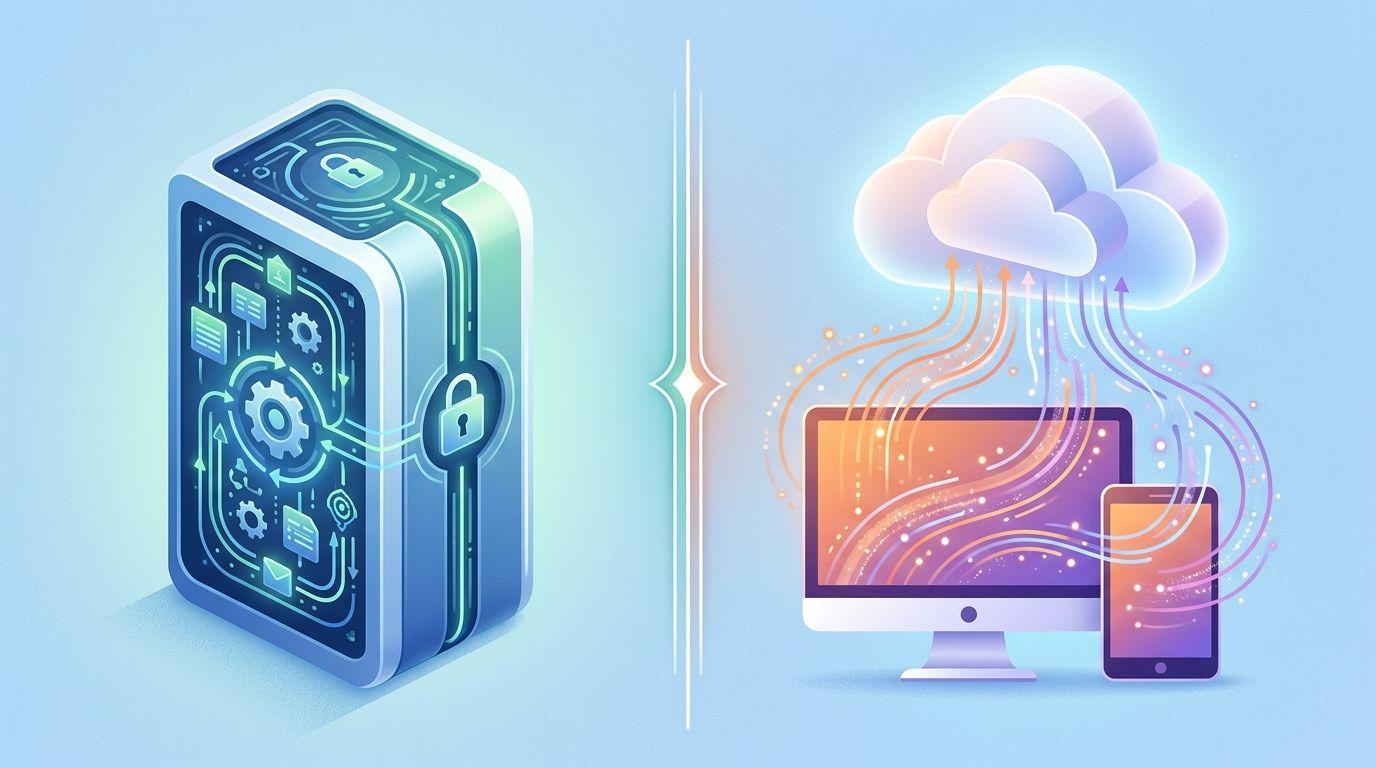
- Cloud-Based AI Agents (e.g., ChatGPT Plus, Claude, Grok): When you interact with AI services like ChatGPT Plus or Claude directly, your data, including prompts and interactions, is sent to the provider's servers. While these companies invest heavily in security, your data inherently resides on third-party infrastructure. This model often involves a degree of trust in the provider's data handling policies, which may include using your input for model improvement, even if de-identified. Concerns arise around unintended sharing with third parties, compliance with varying data residency laws, and the potential for broad data collection practices.
- Self-Hosted AI Agents (e.g., myHermy, OpenClaw): This approach means running your AI agent on hardware or infrastructure that you control, such as a dedicated Virtual Private Server (VPS). With self-hosting, your data never leaves your environment. This is a crucial distinction, as it grants you complete control over your data, how it's processed, and who can access it.
Platforms like myHermy are designed specifically for this self-hosted paradigm. By providing a dedicated VPS with full root/SSH access, myHermy allows users to connect their existing AI subscriptions (like ChatGPT Plus or Claude) or run open-source models while maintaining complete data ownership. Your personal AI agent's interactions and stored information remain within your managed environment, significantly reducing the risks associated with third-party data exposure and enhancing privacy.
Understanding the Risks: What's at Stake?
The privacy risks of personal AI agents can have tangible consequences:
- Identity Theft and Fraud: Exposure of sensitive personal information, such as financial details or private communications, can lead to identity theft, financial fraud, or other malicious activities.
- Loss of Control Over Personal Narratives: AI agents, especially those with extensive access to personal data, could inadvertently or intentionally generate content that misrepresents an individual or reveals private aspects of their life, impacting reputation or relationships.
- Compliance Violations: For professionals, using cloud-based AI agents with sensitive client data can lead to violations of regulations like GDPR, HIPAA, or CCPA, incurring significant financial and reputational damage.
- "Shadow AI" and Unforeseen Liabilities: The rapid deployment of AI agents by employees, often without full visibility or governance from IT or security teams, creates "shadow AI." This can lead to uncontrolled data flows, exposing sensitive information and creating new security vulnerabilities.
Taking Control: Practical Steps for Data Guardianship
Empowering your personal AI agent to be a data guardian requires proactive measures:
- Embrace Data Minimization: Your agent should only collect and retain the data absolutely necessary for its function. Avoid granting broad, unnecessary permissions.
- Choose Self-Hosting for Critical Data: For highly sensitive personal or professional information, opt for self-hosted solutions like myHermy. This ensures your data remains under your direct control, mitigating external risks.
- Implement Least-Privilege Access: Ensure your AI agent has only the minimum necessary access rights for specific tasks and only for the duration required. This limits the potential damage if the agent is compromised.
- Dedicated Identity and Isolation: Treat your AI agent as a distinct non-human identity. Provide it with its own identity and operate it in an isolated environment to prevent it from sprawling or accumulating excessive permissions.
- Enable Robust Monitoring and Logging: Continuously monitor your agent's activity, access patterns, and policy compliance. Full audit logging is crucial for detecting anomalous behavior and ensuring accountability.
- Human Oversight and Approval: For sensitive actions, implement a "human-in-the-loop" mechanism, requiring explicit approval before the agent proceeds.
- Guard Against Prompt Injection: Be aware of the risks of prompt injection and consider using tools or configurations that detect and mitigate such attacks.
- Understand Connected Services: If your agent connects to external APIs or third-party services, understand their data privacy practices and ensure encryption for data in transit. Compartmentalize; use different AI tools for different purposes rather than granting one AI system access to everything.
The myHermy Difference: Empowerment Through Ownership
myHermy stands at the forefront of this shift towards personal data sovereignty. By offering a dedicated VPS, it provides the ideal environment for individuals to run their personal AI agents with unparalleled privacy and control.
- Complete Data Ownership: With myHermy, your agent's data is truly yours. It resides on your VPS, giving you full control over its storage, processing, and lifecycle. Your conversations, preferences, and data are not used by myHermy for model training or shared with third parties.
- Security and Control: Full root/SSH access means you have the power to configure security measures precisely to your needs, implement advanced encryption, and audit all data flows. Daily backups provide peace of mind without ceding control.
- Flexibility and Interoperability: Whether you're connecting an existing ChatGPT Plus or Claude subscription, or deploying an open-source model, myHermy provides the infrastructure to consolidate your AI interactions through various channels like Telegram, WhatsApp, Discord, Slack, and email, all while keeping your core data private.
In a world where AI agents are becoming extensions of ourselves, choosing how and where they operate is a fundamental privacy decision. myHermy empowers you to make that choice confidently, ensuring your personal AI agent is a trusted guardian of your digital life, not a potential risk.
Conclusion
The evolution of personal AI agents presents both incredible opportunities and significant privacy challenges. While the convenience of these autonomous assistants is undeniable, the "privacy paradox" reminds us that their power comes with responsibility. By understanding the inherent differences between cloud-based and self-hosted solutions, recognizing the associated risks, and adopting proactive privacy best practices, individuals can transform their personal AI agents into vigilant data guardians. Platforms like myHermy champion this user-centric approach, offering the infrastructure and control needed to navigate the AI landscape securely and confidently, placing data ownership firmly back in the hands of the individual.