Building Your AI Dream Team: Orchestrating Specialized Personal Agents for Ultimate Automation

Building Your AI Dream Team: Orchestrating Specialized Personal Agents for Ultimate Automation
The landscape of personal productivity is undergoing a profound transformation, driven by the rise of Artificial Intelligence. Gone are the days when AI assistants were limited to answering simple queries or setting alarms. Today, we stand at the precipice of an era where specialized personal AI agents can tackle intricate, multi-step tasks, and crucially, work together to form a highly effective "AI dream team." This isn't just about using a single, powerful AI; it's about strategically combining distinct agents, each a master in its domain, to achieve unprecedented levels of personal automation.
The Evolution of Personal AI: From Chatbots to Specialists
Early AI interactions often felt like conversations with stateless chatbots – you typed a prompt, got a response, and the AI immediately "forgot" who you were. The current trend moves far beyond this, towards "agentic workflows" where AI doesn't just provide an answer but plans, executes, and self-corrects through multi-step processes.
What defines these emerging specialized personal AI agents? Unlike traditional automation tools that follow rigid rules, AI agents understand context, learn your preferences, and make decisions autonomously. They can review data, execute multi-step workflows across different applications, and continuously improve over time. The personal AI agent market is experiencing rapid growth, projected to reach between $48 billion and $52 billion by 2030, up from $7.8 billion in 2025.
These specialized agents are designed for particular functions, such as:
- Research Agents: Sifting through vast amounts of information, summarizing documents, and extracting key insights.
- Scheduled Task Agents: Managing calendars, prioritizing tasks, and ensuring deadlines are met by blocking out focused work time.
- Browser-Action Agents: Interacting with web pages, filling out forms, scraping data, or navigating complex online interfaces.
- Inbox Managers: Classifying emails, drafting replies, flagging urgent messages, and even scheduling meetings directly from your inbox.
- Note-Taking & Knowledge Agents: Transcribing meetings, linking related concepts, and answering questions about your stored information.
Why Orchestrate? Beyond Single-Agent Automation
While a single powerful AI agent can accomplish many tasks, its capabilities can be limited when faced with complex, multi-domain challenges. This is where AI agent orchestration comes into play. Orchestration is the process of coordinating multiple specialized AI agents to work together towards shared, complex goals. Instead of relying on one general-purpose agent to do everything, which can lead to "cognitive overload" and difficulty maintaining context across diverse domains, orchestration leverages a team of specialists.
The benefits of orchestrating an AI dream team are substantial:
- Handling Complexity: Multi-agent systems can break down large, intricate problems into smaller, manageable tasks, with each agent tackling its specialized part.
- Operational Efficiency: By automating multi-step workflows, orchestration reduces manual intervention and handoffs, significantly increasing productivity. A UK government study found that workers using AI assistants saved 26 minutes per day on routine tasks, equating to two weeks of work annually.
- Scalability: You can easily add, remove, or modify agents within a modular system without disrupting the entire workflow.
- Enhanced Specialization and Collaborative Intelligence: Each agent brings its unique expertise, leading to more robust and accurate outcomes through collective problem-solving.
- Contextual Understanding: Agents can share context and information seamlessly, ensuring a unified approach to the overall objective.
Building Your AI Dream Team: Practical Orchestration Strategies
Creating your personal AI dream team requires strategic thinking and a clear understanding of your automation needs.
Define Your Goals with Precision
Start by identifying the specific, complex personal automation goals you want to achieve. Instead of a vague "manage my email," think "automatically triage my inbox, summarize key messages, create tasks for action items, and schedule follow-ups." The more precisely you define the outcome, the easier it is to select and orchestrate the right agents.
Select Your Specialists Judiciously
Based on your goals, choose agents that excel in the necessary domains. For example, if your goal involves extensive online data gathering, a robust browser-action agent is essential. If it involves synthesizing disparate pieces of information, a dedicated research and summarization agent will be invaluable. Remember that some agents specialize in calendar management like Motion or Reclaim.ai, while others like HyperWrite focus on web research and writing.
The Orchestrator: Your Team Manager
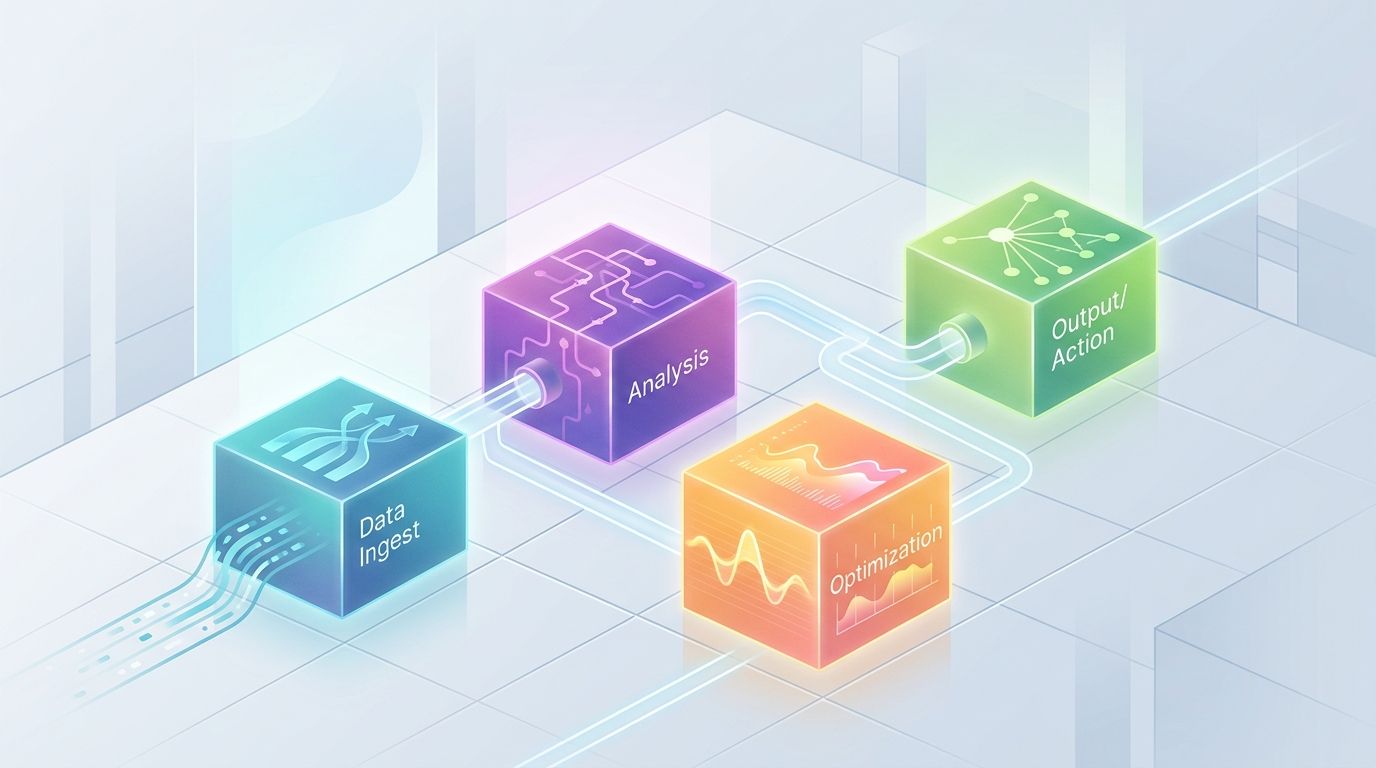
In a multi-agent system, an "orchestrator" or "manager" component is crucial. This can be a central LLM or a dedicated platform that:
- Breaks down the primary goal into sub-tasks.
- Delegates these sub-tasks to the appropriate specialized agents.
- Manages the flow of information and results between agents.
- Ensures seamless handoffs and triggers subsequent actions.
- Maintains overall workflow state and applies policies.
Some platforms like Zapier Central and MindStudio offer capabilities for building and connecting custom AI agents, acting as a "brain" to make decisions across numerous apps. This allows for multi-step loops where AI can call tools and adapt to real-time inputs.
Establish Clear Communication and Handoffs
For your dream team to function, agents need to communicate effectively. This involves defining how agents share outputs (e.g., structured data, summaries) that become inputs for other agents. Think of it as a relay race, where one agent passes the baton to the next, each contributing its part to the overall objective. Technologies like APIs and integrations are fundamental to enabling these connections.
Real-World Personal Automation Scenarios
Let's explore how an orchestrated AI dream team might work for an everyday user:
Scenario 1: The Content Creator's Research Assistant
Imagine needing to write a blog post on a complex topic.
- Research Agent: Scours the web for the latest articles, studies, and data on the topic, summarizing key findings and identifying authoritative sources.
- Browser-Action Agent: Navigates specific academic databases or news sites, extracting detailed information or downloading relevant PDFs.
- Summarization Agent: Processes the collected information, identifying recurring themes, counter-arguments, and statistical data.
- Drafting Agent: Takes the summarized insights and generates a coherent first draft of the blog post, adhering to a specified tone and structure.
- Human Review: You, the creator, provide final polish, adding your unique voice and ensuring factual accuracy.
This team transforms hours of manual research and initial drafting into a streamlined process, allowing you to focus on high-value creative work.
Scenario 2: The Proactive Professional's Inbox & Schedule Manager
Maintaining an organized inbox and schedule can be a full-time job in itself.
- Inbox Triage Agent: Scans incoming emails, classifying them (urgent, meeting request, FYI, unsubscribe), drafting quick replies for common queries, and flagging messages that require personal attention.
- Meeting Scheduling Agent: For meeting requests, it cross-references your calendar, identifies optimal slots based on your preferences, and sends out invitations.
- Task Management Agent: Extracts action items from emails and meeting notes, creating new tasks in your preferred project management tool and assigning deadlines.
- Calendar Optimization Agent: Integrates with your task list and automatically blocks out "focus time" for tasks, adjusting your schedule proactively to ensure critical work gets done.
This orchestrated team ensures you stay on top of communications and commitments without constant manual oversight.
The myHermy Advantage: Empowering Your Agent Ecosystem
Successfully orchestrating an AI dream team demands a robust, reliable, and private environment. This is where myHermy provides an unparalleled foundation.
myHermy offers a dedicated VPS, giving you the full root/SSH access and complete data ownership necessary to securely host and manage your specialized AI agents. Imagine:
- Uninterrupted Operation: Your agents run 24/7 on a dedicated server, ensuring they're always-on and ready to execute complex workflows, unlike solutions that might pause or slow down.
- Enhanced Privacy & Data Ownership: With full control over your VPS, your sensitive personal data processed by your agents remains entirely yours, without being shared or used by third parties for their models. This aligns with the trend of "Edge Agents" for privacy-first intelligence.
- Seamless Integration: myHermy allows you to connect your existing ChatGPT Plus, Claude, GitHub Copilot, or Grok subscriptions, letting your specialized agents leverage the power of these advanced models without incurring additional API rates for foundational LLMs.
- Flexible Access: Reach your orchestrated agents through Telegram, WhatsApp, Discord, Slack, and email – providing the communication channels necessary for effective agent-to-human and agent-to-agent interaction.
- Stability and Control: The one-click deploy and daily backups ensure your AI dream team is always recoverable, and full root access gives you the granular control needed to fine-tune your orchestration environment.
myHermy provides the foundational infrastructure for you to build, customize, and operate your personal AI dream team with confidence, privacy, and unparalleled performance.
Key Takeaways and Future Outlook
The strategic orchestration of specialized personal AI agents is not a distant future; it's a present reality. By moving beyond generic AI and embracing a team-based approach, individuals can unlock potent automation capabilities that save time, reduce mental load, and empower them to focus on higher-value activities.
The key to success lies in:
- Clearly defining your automation goals.
- Selecting the right specialized agents for each task.
- Establishing an effective orchestration mechanism for communication and handoffs.
- Leveraging a secure and controlled hosting environment like myHermy.
As AI agents become even more sophisticated, capable of continuous learning and advanced "computer use" (interacting with software visually), the potential for a truly autonomous and highly customized personal "AI dream team" will only grow. The journey to ultimate personal automation begins with thoughtful orchestration.