Beyond Assistants: When Your Personal AI Becomes Your Digital Operating System
Beyond Assistants: When Your Personal AI Becomes Your Digital Operating System
For years, our interaction with artificial intelligence has largely been defined by reactive assistance. We've grown accustomed to asking a virtual assistant a question and receiving an answer, or dictating a command for a singular task. However, the landscape of personal AI is rapidly evolving. We are now witnessing a profound shift, where personal AI agents are transcending their roles as mere assistants to become proactive, autonomous digital operators—an intelligent operating system for our entire digital lives.
This isn't about a better chatbot; it's about a fundamental redefinition of how we interact with technology. It's a future where AI understands not just our explicit commands, but our implicit needs, our routines, and our aspirations, acting as a central intelligence layer that orchestrates our digital existence.
From Reactive to Proactive: Understanding Agentic AI
The key distinction lies in the evolution from "assistants" to "agents." Traditional digital assistants primarily retrieve information or answer queries. They respond to explicit commands and operate within tightly defined parameters. An AI agent, on the other hand, goes further. It interprets your intentions, creates a plan, and executes that plan autonomously across platforms and applications.
This agentic AI is characterized by its ability to:
- Decompose complex goals into actionable, multi-step tasks without constant explicit instructions.
- Make decisions based on contextual understanding and learned patterns.
- Maintain persistent memory of past interactions and preferences.
- Proactively suggest actions or insights without waiting for a prompt.
- Learn and adapt from successes and failures to improve future performance.
Imagine an AI that not only answers "What's on my calendar tomorrow?" but, noticing a busy schedule, proactively drafts emails to reschedule non-urgent meetings, checks for alternative travel routes based on traffic patterns, and even orders your preferred lunch for delivery, all without you having to ask for each individual step. This shift from passive helper to active participant marks the true dawn of the personal AI agent as a digital operating system.
The Power of Personal Context and Cross-Device Harmony
For an AI to become a true digital operating system, it must possess deep personal context. This "context" refers to all personal and historical data that helps an AI agent tailor its responses and actions to your individual needs. This includes your preferences, past interactions, behavioral data (like frequently used apps or interaction patterns), and even the nuances of your communication style. Without this context, AI agents can feel robotic, generating generic responses that fail to resonate.
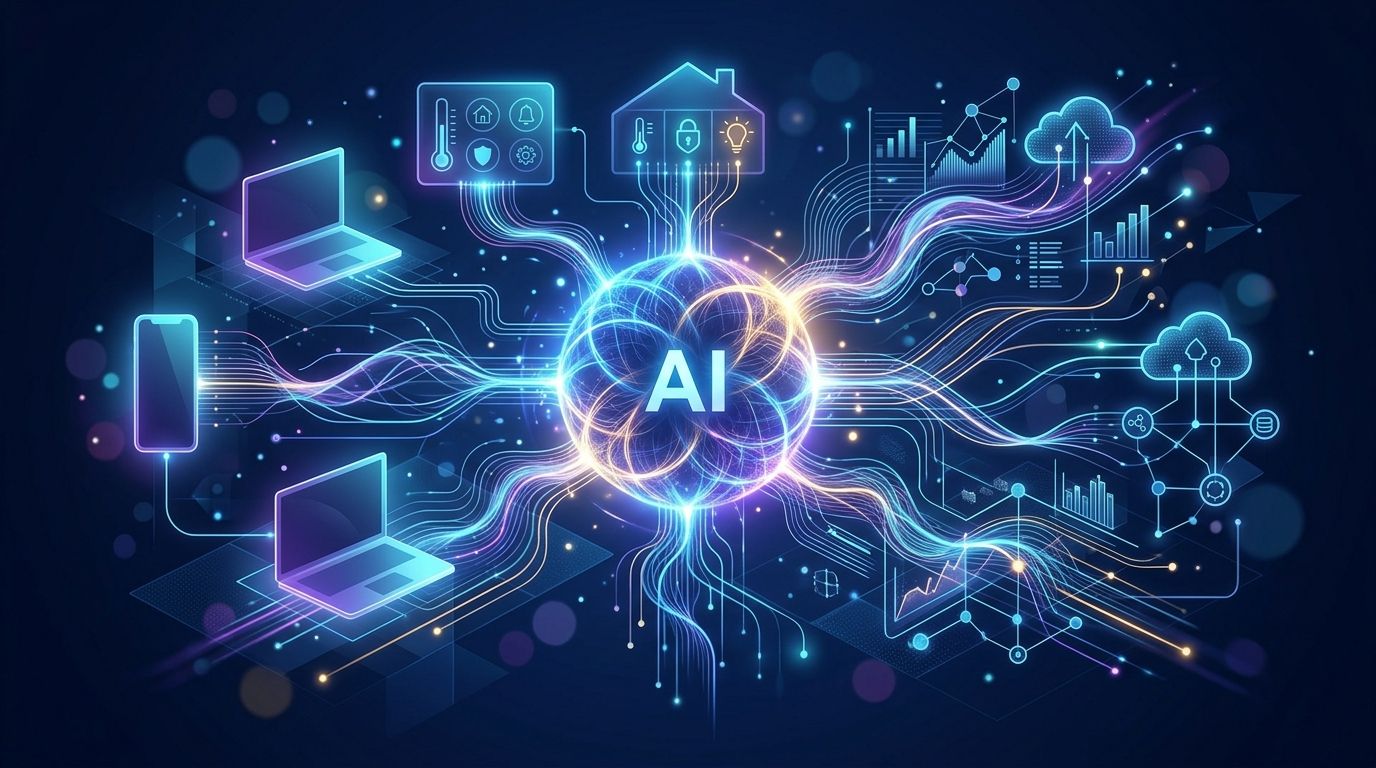
Crucially, this context isn't confined to a single device or application. The future of personal AI is intrinsically linked to cross-device integration. This means seamless interaction and communication between your smartphone, tablet, laptop, smart home devices, and even your vehicle, all powered by your personal AI. Your agent learns your preferences and behaviors across these devices, enabling a cohesive experience where you can switch between them without losing context. This integration, accelerated by the rise of the Internet of Things (IoT), ensures that your AI can manage and optimize interactions across your entire digital ecosystem.
Orchestrating Your Digital Life: Tasks, Decisions, and Workflows
The most transformative aspect of personal AI agents evolving into digital operating systems is their ability to orchestrate complex tasks and make decisions on your behalf. This isn't about simple automation; it's about "AI agent orchestration," where a network of specialized AI agents works together to automate intricate workflows.
Consider these scenarios:
- Travel Planning: Your AI agent identifies an upcoming personal trip based on your calendar, researches flights and accommodations based on your past preferences and loyalty programs, presents a curated itinerary, and even books reservations after your approval.
- Financial Management: It monitors your spending patterns, flags unusual transactions, optimizes your budget, and suggests investment opportunities based on your financial goals, all while integrating with your various banking and investment platforms.
- Information Management: Your agent summarizes overnight emails, prioritizes urgent communications, flags important documents, and organizes files across cloud storage services.
These agents can interpret unstructured inputs, respond to changing conditions, and coordinate multi-step workflows without a human scripting every branch. While human oversight remains critical, especially for sensitive decisions, the AI can handle the volume and complexity, escalating to you only when judgment, compliance, or accountability demands it.
Your AI as a Digital Operating System: A Central Intelligence Layer
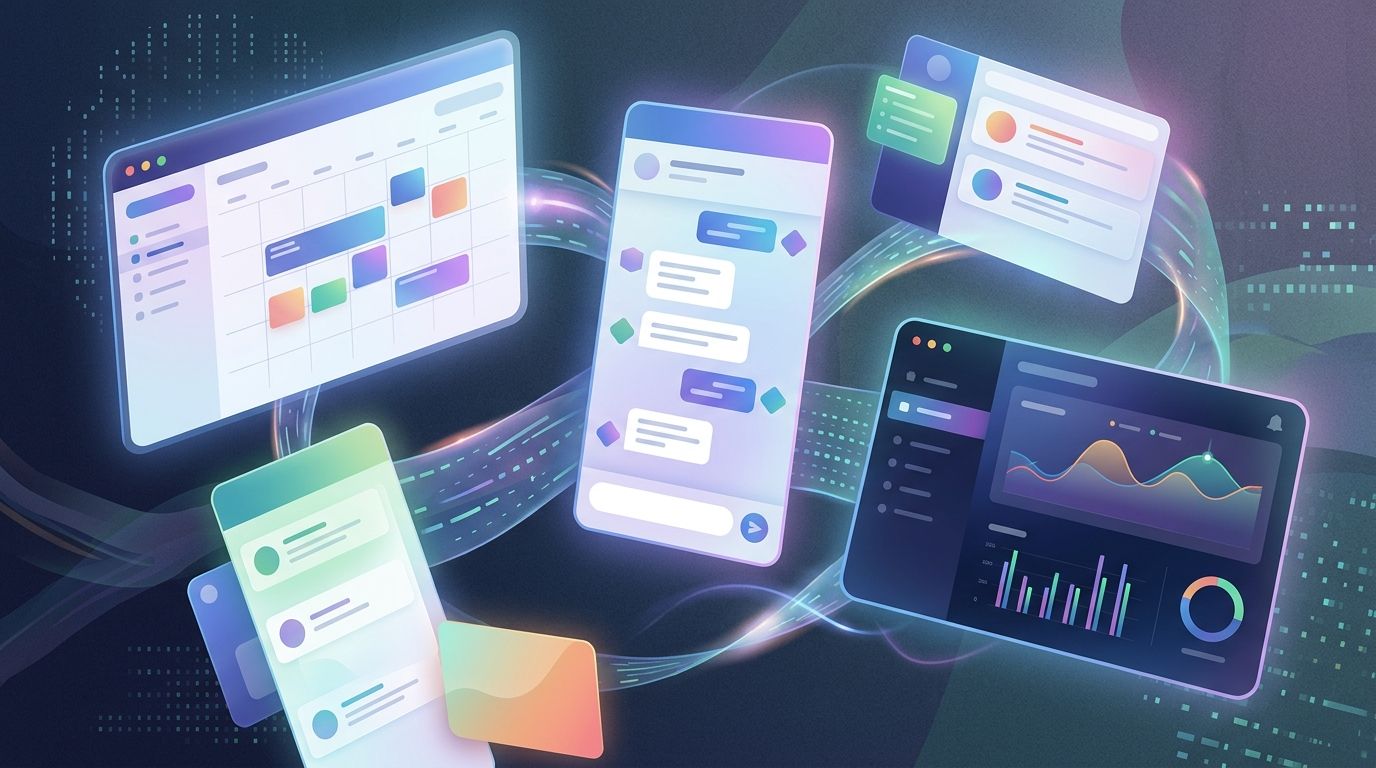
Ultimately, this evolution leads to a future where your personal AI becomes an invisible "operating layer of modern life," shaping routine decisions and simplifying repetitive tasks. It transforms from a mere tool into a "central nervous system" for your digital existence.
This central intelligence layer means:
- Unified Control: Instead of interacting with dozens of separate apps, you interact primarily with your AI, which then manages the underlying applications as backend services.
- Proactive Management: Your agent doesn't wait for commands; it anticipates your needs, suggests actions, and manages your digital environment to align with your goals. It might notice your calendar is packed and suggest moving an optional meeting or alert you to a price drop on an item you've been watching.
- Personalized Experience: Every digital interaction, from browsing to communication, is filtered and optimized through your unique preferences and context, creating a deeply personalized and intuitive experience.
This shifts human interaction with technology from operating machines to interacting with systems designed to understand context and intent.
Enabling the Future: The Role of Dedicated Infrastructure
For such advanced personal AI agents to function effectively, they require robust, always-on, and secure infrastructure. This is where managed hosting platforms like myHermy become crucial. Running your personal AI agent on a dedicated Virtual Private Server (VPS) offers several key advantages for this evolving paradigm:
- Always-On Availability: Your personal AI, functioning as your digital OS, needs to be continuously active to monitor, learn, and act proactively. myHermy ensures your agent is always online, without the need for you to manage servers or installations.
- Deep Context and Data Ownership: To leverage deep personal context, your AI needs access to your data. Hosting your agent on a private server with myHermy means 100% data ownership, ensuring privacy and control over your personal information, rather than having it tied to a third-party's terms of service or training their models.
- Seamless Cross-Platform Integration: Advanced agents like Hermes Agent, for example, are designed to integrate with various messaging apps and can be configured to run continuously. myHermy supports connections to platforms like Telegram, WhatsApp, Discord, Slack, and email, allowing your agent to reach you and act on your behalf across your preferred communication channels.
- Flexibility and Power: Connecting your existing ChatGPT Plus, Claude, GitHub Copilot, or Grok subscription through myHermy allows you to harness the power of these advanced models without incurring additional API costs. Furthermore, full root/SSH access offers unparalleled flexibility for customization and advanced use cases.
- Reliability and Resilience: Daily backups and one-click restore features provide peace of mind, ensuring your digital OS is resilient and your data is protected.
Dedicated infrastructure empowers your personal AI to transition from a helpful assistant to an indispensable, autonomous digital operating system, continuously learning and acting on your behalf in a secure, private environment.
Practical Takeaways: Embracing Your Digital OS
The journey towards an AI-powered digital operating system is underway. Here are some practical steps to consider:
- Understand the Shift: Recognize that AI is moving beyond simple query-response. Look for platforms and tools that emphasize agentic capabilities, planning, and autonomous action.
- Prioritize Data Ownership and Privacy: As your AI becomes more central to your digital life, the control over your data becomes paramount. Opt for solutions that offer privacy and full ownership.
- Experiment with Agentic Frameworks: Explore open-source AI agent frameworks and platforms that allow for custom skills, persistent memory, and multi-step task execution.
- Consider Dedicated Hosting: For true autonomy and always-on functionality, a dedicated hosting solution like myHermy provides the stable, private environment your personal AI agent needs to thrive as your digital operating system.
- Define Your Automation Boundaries: Start by delegating repetitive, time-consuming tasks to your AI agent, gradually expanding its responsibilities as you gain confidence and observe its performance. Maintain a clear understanding of when human judgment is still essential.
The future isn't just about having an AI assistant; it's about having a personal AI that acts as the intelligent core of your entire digital world, working tirelessly and proactively to enhance your productivity, simplify your life, and expand your capabilities.